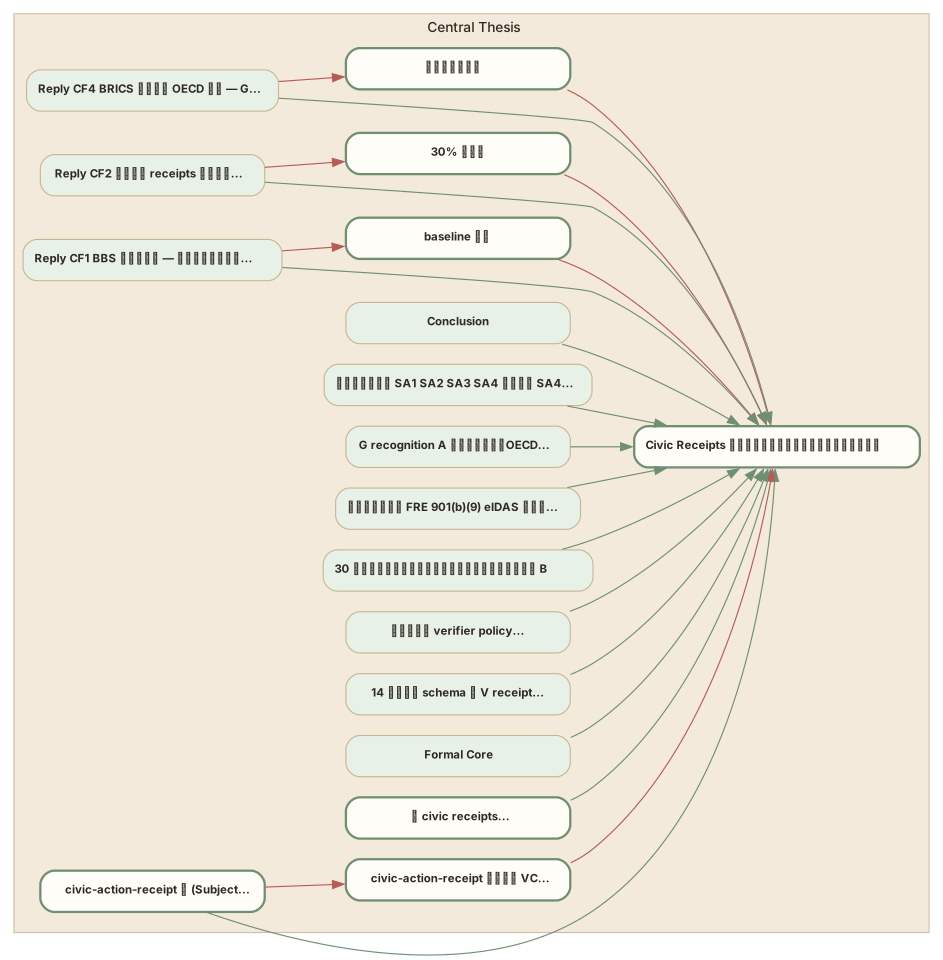
Argument Map
Civic Receipts 與證據鏈:條件可委任區的可審計工程原語
Civic Receipts and Provenance Chain — Argument Map (v2)
civic receipts 是條件可委任區 Z₂ 中 supported / substituted 可區分性的密碼學承載;落地需四原語 SA1-SA4——baseline SD-JWT-VC 加上條件性高階 BBS+ Cryptosuite 由 verifier policy 反向約束的混合策略;holder-controlled 為主搭配第三方 qualified preservation service 加密 backup 的雙軌設計,保存時長下限為 30 年(限「無聲明保留之 OECD 與 CRPD 締約國」範圍);法庭可採性對接 US FRE 901(b)(9)、eIDAS 2024/1183 Chapter III §7-8、台灣電子簽章法 §4 / §10,跨境承認透過 Hague e-APP;跨境互認透過 G_recognition^A 軟法層 5 / 10 / 15 年三段推進。四原語對 F1 §3 5×3 矩陣 9-✓ 與 4-△ cell 在 Z₂ 範圍內覆蓋(定理 T1),對 Z₃-intrinsic 兩 cell(RT-ℬ ✗ / AA-ℬ ✗)為密碼學原語不可達邊界(定理 T2)。SA1 → SA2 → SA3 → SA4 為驗證依賴線性閉包,SA4 → SA1 為設計階段反饋環路。working thesis 與 strengthened thesis 嚴格區分;後者透過 crypto-agility by design、第三方 trusted preservation service 對接、G_recognition^A 多軌備援三大緩解 critical path 在五 CF 全觸發下保留核心功能。
Civic receipts operationalise the supported / substituted distinguishability requirement within CRPD Z₂ via four standardisable primitives (cryptosuite / preservation / admissibility / recognition), with a linear SA1→SA2→SA3→SA4 verification closure and an SA4→SA1 design-time feedback loop, sustained under five counterfactuals only when three critical-path mitigations are bundled into the strengthened thesis.
Receipt(r) ≜ ⟨cryptosuite_id, holder_did, agent_did?, deliberation_hash, retention_floor,
              jurisdictional_profile, audit_release_policy, recognition_chain, ...⟩  (14 group / 23 leaf)

V_receipt(r) ⇔ V_cryptosuite(r) ∧ V_preservation(r) ∧ V_admissibility(r) ∧ V_recognition(r)  (T3)
            ⇔ ex_ante_deliberation(r) ∧ ex_post_reversibility(r) ∧ decision_trace(r)         (T4)

CriticalPath : SA1 → SA2 → SA3 → SA4   (linear verification closure)
FeedbackLoop : SA4 → SA1               (jurisdictional_profile 反向約束 AcceptedSuites(τ))

Distinguishability(supported, substituted) ⇔ ex_ante ∧ ex_post_rev ∧ trace
CRPD GC1 §29 ≜ hard_constraint(audit_trail)

Cryptosuite ∈ { SD-JWT-VC (baseline) , BBS+ (advanced, conditional on W3C Rec) ,
                ZK-SNARK (narrow profile, F3 議題) }
Preservation = {holder-controlled} ⊕ {QPSP encrypted backup, threshold signatures}
               ;  retention ≥ 30y  (限「無聲明保留之 OECD + CRPD 締約國」)
Admissibility-profile(j) ∈ { us-fre-901b9 , eu-eidas-art25-35 (修正後 Chapter III §7-8) ,
                             tw-esign-art4-10 }
Recognition-anchor ∈ { OECD-AI-Principles-supplement (≈ 5y) ,
                       CETS-225-protocol (≈ 10y) ,
                       Hague-e-APP-extension (≈ 15y) }

T1 (Z₂ 包覆引理)    : ∀ cell ∈ M[i,j] (✓ ∪ △) , ∃ σ ⊆ {SA1..SA4} : P_degrade(cell|σ) ≤ θ₂ ≈ 0.7
T2 (Z₃-intrinsic 不可達) : ∀ σ , P_degrade(M[RT,ℬ] | σ) > θ₂ ∧ P_degrade(M[AA,ℬ] | σ) > θ₂

StressTest CF1..CF5 ⇒ working_thesis ≠ strengthened_thesis
strengthened_thesis ≜ working_thesis ∧ crypto_agility ∧ QPSP_interface ∧ multi-track_recognition
civic-action-receipt 由 14 個欄位群 / 23 個 leaf field 承載,V_receipt 由 C1-C6 六道條件合取定義,定理 T3 把它拆為四原語子句、定理 T4 把它對應到 F1 三層可區分性。SA1 → SA2 → SA3 → SA4 為驗證依賴線性閉包,SA4 → SA1 是 jurisdictional_profile 反向約束 cryptosuite 集合的設計階段環路。Z₂ 範圍內 9-✓ 與 4-△ cell 由四原語覆蓋(T1),Z₃-intrinsic 兩 cell(RT-ℬ ✗ / AA-ℬ ✗)為定理 T2 不可達邊界。五個反事實壓力測試把 working thesis 與 strengthened thesis 拉開——後者透過三大緩解 critical path(crypto-agility / QPSP 對接 / 多軌承認)在 5 CF 全觸發下保留核心功能。
SA1 / SA2 / SA3 / SA4- 四原語(cryptosuite 選擇 / 長期保存 / 法庭可採性 / 跨境互認)
V_receipt(r)- receipt-validity 函數,由 C1-C6 六道條件合取定義
T1 / T2 / T3 / T4- 定理一(Z₂ 包覆)/ 定理二(Z₃-intrinsic 不可達)/ 定理三(critical path 串接)/ 定理四(與 F1 三層可區分性對應)
M[i, j]- F1 §3 5×3 必要條件矩陣中第 i 件 × 第 j 元的 cell;i ∈ {AT, RT, AA, BS, TC}、j ∈ {𝒩, ℱ, ℬ}
Z₂ / Z₃-intrinsic- F1 §3.3 條件可委任區 / 常駐型結構不可委任區(由 ℬ 哲學基礎決定)
P_degrade- F1 §3.2 概率退化函數(給定情境下 cell 退化機率);θ₂ ≈ 0.7 為 Z₂ / Z₃ 劃界閾值
AcceptedSuites(τ)- τ 時點仍未被破解且仍在 SDO 認可清單內的 cryptosuite 集合
G_recognition^A- FTLA-Agent 跨境承認層(article 8 + article 17 §7),由 OECD / CETS 225 / Hague e-APP 三條軟法路徑 5 / 10 / 15 年三段承載
⊕- 雙軌組合(holder-controlled 為主、第三方 backup 為次)
≜- 「定義為」
⇔- 「當且僅當」
∧- 合取
公式給出立場,下一步要把常見誤讀拉開。civic-action-receipt 在當前 wallet / VC 工程論述中常被當作「VC Presentation 的一個別名 + 寫入 audit log 就完成」處理;只要這個分類成立,現有 SD-JWT-VC + status list + EUDI ARF 三件套就足以覆蓋公民行動場景,supported / substituted 區分由 wallet UI 承擔。地圖的第一動作是把這個化約論述與「14 欄位 schema + V_receipt 六道條件 + 四原語落地」拉開。
civic-action-receipt 可化約為 VC Presentation 加 audit log
把 civic-action-receipt 視為 W3C VCDM v2.0 §5.7 / §7.1 範疇下 VP 的別名,由 wallet 端在每次出示時寫入 audit log 即完成。在這個分類下,supported / substituted 區分由 wallet UI 承擔,跨境互認由 EUDI Wallet ARF + OpenID4VP 三件套覆蓋,30 年保存與法庭可採性是「下游」工程議題、不影響 schema 設計。混淆 VP 與 receipt 會帶來兩個論證代價——其一,VCDM v2.0 §5.7 對 ZKP 採「合成自原始 VC 但不含原始資料」的表述,audit trail 對「可被 court order 解開的 content_hash 對位」需求即無從成立,正面違反 CRPD GC1 §29 independent review 程序要求;其二,FRE 902(14) 的 process of digital identification 在 Advisory Committee Note 中以 hash value comparison 為典型例,VP 本身不含 hash 對位欄位,receipt 必須含 content_hash 才能符合 902(14) 的工程化條件。
Receipt(r) ≜ VP(r) ∧ AuditLog(r) ∧ ⟨content_hash, jurisdictional_profile, recognition_chain⟩ ⊥ Receipt civic-action-receipt 是 (Subject, Verifier) → Audit 方向的 commitment 物件,由 14 欄位 schema + V_receipt 六道條件 + 四原語落地承載
civic-action-receipt 與 VP 的形式位置不同——VP 是 Subject → Verifier 方向的 disclosure 物件,receipt 是 (Subject, Verifier) → Audit 方向的 commitment 物件,由 verifier 端產出、holder 端與 audit trail 端各保留一份。schema 為 14 個欄位群(巢狀展開合計約 23 個 leaf field),繼承 F1 §5.4 DeliberationRecord 與 §7.3.1 enabling envelope,新增 9 個欄位群對應 SA1-SA4 四原語的工程承載(cryptosuite_id / preservation_layer + retention_floor / content_hash + qualified_person_attestation + jurisdictional_profile / recognition_chain + cross_border_envelope)。V_receipt 由 C1-C6 六道條件合取定義,定理 T3 把它拆為四原語子句、定理 T4 把它對應到 F1 三層可區分性(ex_ante_deliberation ∧ ex_post_reversibility ∧ decision_trace)。
V_receipt(r) ⇔ V_cryptosuite(r) ∧ V_preservation(r) ∧ V_admissibility(r) ∧ V_recognition(r) ; CriticalPath: SA1 → SA2 → SA3 → SA4 ; FeedbackLoop: SA4 → SA1 區分本身只是宣告。要證明 civic receipts 需要 14 個欄位群 schema + 四原語合取(而非一句「在 VP 上加 audit log」),需要五條獨立來源的支撐——演繹面提供 14 欄位 schema 與 V_receipt 六道條件的形式骨架;歸納因果面提供 SD-JWT-VC / BBS+ / ZK-SNARK 三族在 verifier policy 三時點協商下的工程約束;溯因面提供 30 年下限的三窗口推導與雙軌設計排除設計 B 的規範推論;類比面提供三法域對接、ESI 類比限制、Apostille 公私文書分裂的承載結構;前瞻面提供 5 / 10 / 15 年三段軟法時程與非 OECD 並行軌。五條 pillar 對應五個論證類型,缺一立場就退化為呼籲。
§3 — 演繹(14 欄位 schema + V_receipt 六道條件 + 定理 T1-T4)
14 個欄位群 schema 與 V_receipt 函數構成四原語的形式骨架
why提供合取分析骨架——若 schema 與 V_receipt 不能形式化為函數,四原語只能停在語言層;若四原語在 F1 5×3 矩陣的對應 cell 不明示,T1 包覆引理與 T2 不可達引理就只是修辭。
把 F1 §5.4 DeliberationRecord(11 個欄位群)與 §7.3.1 enabling envelope 合併得到 14 個欄位群 schema,巢狀展開合計約 23 個 leaf field。schema 採兩層計數規約——「欄位群」為最上層命名單元、「leaf field」為展開至基本型別之終端條目;繼承自 DR / ENV 共 11 群、新增 9 群(計數以最強歸屬計),與 leaf 層 1.22:1 比例對位。新增欄位均對應具體 sub-arg 工程需求:cryptosuite_id 對應 SA1 mixed strategy 三時點協商、preservation_layer / retention_floor 對應 SA2 雙軌設計、content_hash / qualified_person_attestation 對應 SA3 FRE 901(b)(9) 對接、jurisdictional_profile 對應 SA3 三法域分軌、recognition_chain / cross_border_envelope 對應 SA4 軟法層三段、audit_release_policy 對應 GDPR Art 5(1)(b)(c) 與 EDPB Statement 1/2024。V_receipt 由 C1(cryptosuite robustness)+ C2(agent-vs-holder distinguishability)+ C3(preservation)+ C4(admissibility)+ C5(recognition)+ C6(revocability)六道條件合取定義,τ 為 receipt 被驗證的當下時間,AcceptedSuites(τ) 是 τ 時點仍未被破解且仍在 SDO 認可清單內的 cryptosuite 集合。四原語對 F1 5×3 矩陣 9-✓ 與 4-△ cell 在 Z₂ 範圍內覆蓋(T1 包覆引理);對 RT-ℬ ✗ 與 AA-ℬ ✗ 兩 cell 為密碼學原語不可達邊界(T2 不可達引理);定理 T3 把 V_receipt 拆為四原語子句、定理 T4 把它對應到 F1 三層可區分性。
schema = 14 group / 23 leaf ; V_receipt(r) = ⋀_{i=1..6} Cᵢ(r) ; T1: ∀ cell ∈ (✓ ∪ △) , ∃ σ : P_degrade(cell|σ) ≤ θ₂ ; T2: ∀ σ , P_degrade(M[RT,ℬ]|σ) > θ₂ ∧ P_degrade(M[AA,ℬ]|σ) > θ₂ §4 — 歸納 + 因果(SD-JWT-VC / BBS+ / ZK-SNARK 三族 + verifier policy 三時點)
混合策略是 verifier policy 反向約束的工程結構,三時點決策承擔協商
why提供 SA1 cryptosuite 選擇的工程基底——若三族技術不被明示為「規範成熟度 / 簽章大小 / 驗證成本 / unlinkability / quantum-safe / hardware key custody 六維各有取捨」,「BBS+ 為高階」的條件成立分層會被讀成 marketing;若 mixed strategy 被當作「同份 credential 同時帶三族簽章」會錯失工程結構。
SD-JWT-VC 屬 IETF OAuth WG 軌道,RFC 9901(2025-04)+ draft-16(2026-04-24)穩定,EUDI Wallet ARF 2025-12 iteration §2.3.1 明文 MUST 支援;hardware key custody 全面支援(Secure Enclave / StrongBox / TPM),PQC 遷移直接(換 ML-DSA / Falcon 即可),但無 unlinkability。BBS+ Cryptosuite 屬 W3C VC WG 軌道,W3C vc-di-bbs 於 2026-04-07 進入 CRD、IRTF CFRG draft-07 於 2025-08 通過 Last Call、W3C VC WG 2025-10 charter renewal 對 Recommendation 時程的字眼為「best-effort Q4 2026 / Q1 2027」;原生 multi-message selective disclosure + unlinkable proof generation,但 Secure Enclave / StrongBox / TPM 不原生支援 BLS12-381,prover 須在 application memory 執行;BLS12-381 在量子電腦下不安全、無近期 PQC 替代路徑。ZK-SNARK on VC 屬廠商實作軌道,W3C Explorer Note (2024-09) 明文標示「not on Recommendation track」,定位為 complex predicate 專用 advanced narrow profile,不替代 baseline。「BBS+ 為高階」採規範性的、條件成立的分層論述——條件為 W3C BBS Cryptosuite 達 Recommendation;若 2027 Q1 前未達,baseline 退回到只用 SD-JWT-VC、BBS+ 分層推遲到 2028。mixed strategy 是 verifier policy 反向約束 issuer 與 holder 選擇的工程結構,由三個時點承擔——(a) issuance-time(issuer 選 cryptosuite,一張 credential 用一族)+ (b) presentation-time(holder 從 wallet 多份 credentials 挑選符合 verifier policy 的呈現方式)+ (c) verification-time(verifier 接受或拒絕,並回傳 fallback 提示)。協商通道為 OpenID4VP draft-23 + DIF Presentation Exchange v2.1。
Cryptosuite ∈ {SD-JWT-VC (RFC 9901 + draft-16, MUST baseline), BBS+ (CRD, conditional advanced), ZK-SNARK (Explorer Note, narrow profile)} ; MixedStrategy ≜ ⟨issuance-time, presentation-time, verification-time⟩ ; verifier-policy reverse-constrains AcceptedSuites(τ) §5 — 溯因(30 年下限三窗口推導 + 三失效模式 + 設計 A / B / C)
30 年下限由三規範性窗口聚合推導,雙軌設計排除設計 B
why提供 SA2 長期保存的溯因論證——從 supported decision-making 的 30 年規範要求反推工程設計判準。若 30 年下限沒有三窗口推導,「分析性建議數」會退化為任意選擇;若設計 B 不被明示排除,court override + 第三方獨立行使私鑰會把 SA2 整體拉回 CRPD §28 substituted 禁令範圍。
30 年下限採規範性與經驗性兩類證據的下限均衡推導,由三規範性窗口的最大值聚合——(i) CRPD 給付請領訴訟時效(德國 BGB §197(1) Nr. 1 對確定判決所確認之退休給付請求權 30 年 + SGB I §45 未告知延長,取窗口最大值 30 年)+ (ii) 失能監護宣告爭議的回溯期(極端案例 30 年)+ (iii) Toeslagenaffaire 級事後追溯期(自行推估事後 8 年發現 + 14 年救濟長尾共 22 年)。三窗口聚合落在 22-30 年區間,本文取 30 年並限定為「無聲明保留之 OECD 與 CRPD 締約國」範圍(明示印度 DPDP、巴西 LGPD、印尼 PDP、Aadhaar UIDAI 短時效不普適)。holder-only 設計在三場景下失效——失智症(CDR ≥ 2 後 wallet 私鑰失能)+ 裝置遺失 / 損壞 / OS 強制更新 + 死亡後 digital estate(RUFADAA 假設 fiduciary 能拿到 credentials,self-custody wallet 在缺乏 continuing instructions to fiduciary 時 fiduciary 無法取得)。三種雙軌設計比較中——設計 A(第三方持加密 backup,holder 持唯一解密鑰)+ 設計 C(threshold signatures,建議起點 t=2 / n=3)通過 CRPD §28 檢驗;設計 B(multi-sig escrow with court override,第三方獨立行使私鑰)直接違反 §28 對 substituted 的禁令,本文不採。第三方公證人在雙軌設計下採「保存代理」定位——QPSP 持加密 backup 與完整性證據鏈,不持解密鑰,不替代 holder。Estonia X-Road 25 年保存實踐 + 北歐 BankID 死亡持卡人處理(家屬須提供死亡證明 + 繼承資格 skifteattest + 既存識別資料)構成案例證據。
retention_floor = max(W_CRPD_claim, W_capacity_dispute, W_Toeslagen) ≥ 30y ; scope ≜ OECD ∩ CRPD_party ∖ reserved ; Design = A (QPSP encrypted backup) ⊕ C (threshold t/n) ; Design B ⊨ violates CRPD §28 §6 — 歸納 + 類比(三法域對接 + ESI 類比 + Apostille 公私文書區分)
法庭可採性對接 FRE 901(b)(9) / eIDAS 修正後 §7-§8 / 台灣電子簽章法 §4-§10,Apostille 公私文書區分為破口
why提供 SA3 法庭可採性的對接結構——若三法域 admissibility profile 不被明示對位,jurisdictional_profile 欄位即無語義邊界;若 ESI 類比的限制不被釘住,Sedona Principles 6 / 11 對 receipts 揭露範圍與 metadata 邊界的混用會掏空 chooser_signature 工程;若 Mata v Avianca 不被定位為負面先例,agent-mediated receipts 在缺乏 chooser_signature 時可能被法院視為 ChatGPT 幻覺紀錄整批不採。
三法域對接表把 admissibility profile 拆為三軌——US 採 FRE 901, 902(14), 803(6) + Lorraine v Markel ESI authentication 五步測試 + Daubert 五因子;EU 採 Regulation (EU) 2024/1183 Chapter III §7(preservation;前身 Art 33-34)+ §8(QES 自動等同手寫簽章;前身 Art 35)+ ETSI TS 119 511 / 512;台灣採電子簽章法 §4 / §10 + 民訴法 363 / 363-1 條 + 行政院 2026 修正草案(立法院審議中)。holder-controlled receipts 不走 FRE 902(14) 自證真實,改走 FRE 901(b)(9)「process or system 描述 + accuracy 證明」較重路徑,由 chooser_signature + audit-by-design + revocation_endpoint 三件套承擔。ESI 類比有限——FRCP 26(f) / 34(b) + Sedona Principles 預設「enterprise records」,civic receipts 預設「holder-controlled assertion」帶有訴訟動機;FRE 803(6) hearsay rule 對 receipts 有三條應對路徑——verbal act(行為之發生,落出 hearsay 適用範圍)+ present sense impression(FRE 803(1),由 timestamp_proposed / decided / presented 三時點承載)+ 803(6) 擴張(Grimm-Capra-Joseph 2017 主張個人 regularly conducted personal record-keeping)。Mata v Avianca, 22-cv-1461 (S.D.N.Y. 2023) 是負面先例 / 反面教材而非合法樣板——任何 agent-mediated receipt 若無 chooser_signature 明示 holder 在場簽署,可能被法院視為 ChatGPT-style 幻覺紀錄整批不採;schema 將 agent_did 設計為 nullable、要求 agent_did ≠ null 時 agent_delegation_proof 與 agent_delegation_capability_hash 兩欄位皆非 null 且可驗證至 subject_did,即此負面先例的工程修正。Apostille 公私文書區分為跨境承認層破口——civic receipt 若由公權力機關(如健保署、長照管理中心)為 issuer,可主張屬廣義 public document;由私人 issuer 則屬私文書,Apostille 不適用、跨境承認須改走 1965 服務公約或個案外交認證。Daubert 五因子在 BBS+ 與 ZK-SNARK 上的張力——BBS+ 第四、第五因子(standards / general acceptance)有舉證壓力,須援引 Tessaro-Zhu (2023) EUROCRYPT 與 Camenisch-Drijvers-Lehmann (2016) TRUST 安全證明;ZK-SNARK 在 federal civic-action 場景未建立 general acceptance,定位為 narrow profile。
jurisdictional_profile ∈ {us-fre-901b9, eu-eidas-art25-35 (修正後 §7-§8), tw-esign-art4-10} ; holder-controlled → 901(b)(9) 較重路徑 (¬ 902(14)) ; hearsay-response ∈ {verbal_act, present_sense_impression, 803(6)-extension} ; Apostille(receipt) ⇔ public_document(issuer) §7 — 類比 + 前瞻(5 / 10 / 15 年三段時程 + 非 OECD 並行軌)
G_recognition^A 軟法層分三段、OECD 外覆蓋空白為承認而非預測
why提供 SA4 跨境互認的治理回應——若 FTLA 第三層 G_recognition^A 不被拆為 OECD AI Principles 補充指引 5 年期、CETS 225 補充協議 10 年期、Hague PIL e-APP extension 15 年期三段,整層估計會被「跨境治理永遠是政治不可行」反論掏空;若 OECD 外覆蓋空白不被明示為「承認」而非「預測」,非 OECD 並行軌的設計會被誤讀為西方中心主義的補丁。
G_recognition^A 在 F1 §7.8 既有用法為 10-15 年總體估計,F2 拆為三段——(i) OECD AI Principles 補充指引(5 年期 2026-2031):2026-2027 OECD AI Working Party 將 civic receipts 列入工作項、2027-2029 OECD 發布 supplementary guidance、2029-2031 OECD AI Principles 第二輪修訂寫入 Principle 1.5 accountability implementation guidance;條件變項為 OECD 內政治意願不中斷、至少一個 leading member 率先採納、G7 Hiroshima Process Friends Group 不中斷。(ii) CETS 225 補充協議(10 年期 2026-2035):2027-2028 Conference of Parties 啟動議題、2028-2030 Drafting Committee 草擬、2030-2032 Committee of Ministers 通過、2032-2035 補充協議生效;條件變項為 CETS 225 簽署國維持簽署地位、CoE 補充協議起草歷史平均耗時 5-8 年構成下限。(iii) Hague PIL e-Apostille extension(15 年期 2026-2041):2026-2028 Special Commission 列入工作項、2028-2031 Permanent Bureau preliminary document、2031-2034 通過 Recommendations、2034-2041 各國內法 implementation 與全面運作;Apostille 概念之根本擴展可能不適合 HCCH 保守風格、亦可能改走 1965 服務公約之數位化,是「最有可能」而非「唯一可能」。OECD 涵蓋全球 GDP 約 65% 但人口僅約 18%(F1 §7.5.4),三條軟法路徑均存在 OECD 外覆蓋空白;OECD 外覆蓋空白為「承認」而非「預測」、並非透過 SA4 可消除的不可消除邊界。非 OECD 並行軌設計——(a) AU Continental AI Strategy 2024(mobile-money + foundational ID 整合)+ (b) APEC CBPR + Global CBPR Forum 2024 Declaration(對台灣特別重要——非 OECD / 非 CoE / 非 EU 之主要承接軌道)+ (c) 印度 DEPA consent artefact(與 civic-action-receipt 結構同構,schema-level functional equivalence 待 DEPA 規範文本進一步公開)+ (d) 巴西 LGPD + ANPD adequacy / 印尼 PDP / GCC Mutual Recognition Initiative / ASEAN DEFA。EUDI 強制階段(Regulation (EU) 2024/1183 Art 5a 要求 2026-12 起會員國強制提供)為 OECD 5 年路徑 accelerator。軟法歷史轉化軌跡——1980 OECD Privacy Guidelines → 2018 GDPR 經 38 年;1990 OECD Cryptography Guidelines → 2001 Budapest Cybercrime Convention 經 11 年;2019 OECD AI Principles → 2024 CETS 225 經 5 年;轉化路徑存在但變項是政治意願與時間。
G_recognition^A = ⟨anchor_OECD (≈ 5y), anchor_CETS225 (≈ 10y), anchor_Hague (≈ 15y)⟩ ; parallel-track ∈ {AU, APEC-CBPR, India-DEPA, LGPD, PDP, GCC, ASEAN-DEFA} ; OECD-coverage-gap ≜ recognition ¬ prediction pillars 是正向論證。但「critical path 為工程依賴鏈條而非修辭」這個主張,必須由一條具體的依賴鏈頂住。SA1 → SA2 → SA3 → SA4 把四原語以 D1-D3 三條形式條件串為線性閉包,D1 是 cryptosuite 在 retention 期間仍可驗證、D2 是 preservation 完整性對 admissibility 的前置、D3 是來源法域 admissibility 對目標法域承認的前置;SA4 → SA1 反饋環路顯示 jurisdictional_profile 反向約束 AcceptedSuites(τ)(例如 BBS+ over BLS12-381 不在 FIPS 186-5)。鏈條展開的目的是把抽象的「四原語合取」翻譯為可被機制性追溯的依賴條件,並把「PQC 威脅」「30 年保存」這類時間性議題嵌入鏈條結構。
四原語驗證依賴 SA1 → SA2 → SA3 → SA4 線性閉包 + SA4 → SA1 設計階段反饋環路
⇒ 機制必然(結構性依賴,不依賴外部 trigger) ◊⇒ 概率性(需要外部 trigger 才實現,但概率不可忽略) 立場 + 因果鏈成立後,反論才真的具威脅。五個反事實壓力測試中,CF1(BBS+ 標準化延後)、CF2(失智長者集體失效)、CF4(BRICS 拒絕 OECD 路徑)三條對 SA1 / SA2 / SA4 主幹各構成獨立威脅;仔細檢驗每條反論的 likelihood-by-mechanism 推論,會發現它們不僅未推翻地圖立場,反而 flip to support 三大緩解 critical path 的必要性——亦即反論自己的證據結構,正好是 strengthened thesis 的第二層支撐。CF3(法庭拒絕)與 CF5(PQC 威脅)作為連鎖衝擊在 conditions 與 conclusion 中處理,避免 borders 過載。
反論 1
CF1 BBS+ 標準化順延 — 高階分層不成立故 mixed strategy 是過度設計
pivotW3C BBS Cryptosuite WG 2026 Q4 預定 Recommendation 順延至 2029,順延原因可拆三條機制鏈——互操作測試失敗鏈(BLS12-381 與 hardware token batch verification 不相容)+ IPR 揭露鏈(IBM 2004-2009 group signature 專利族與 Microsoft anonymous credential 申請的 W3C PAG 處理時程不可預期)+ 政策爭議鏈(歐盟、美國、日本對 unlinkability 強度評估分歧)。第一條已部分顯現——2024 W3C BBS Cryptosuite WG issue tracker 中關於 BLS12-381 與 hardware 相容性的 issue 至 2025 中尚未關閉。觸發機率 medium。實證強度上,若 BBS+ 延後到 2029-2031,SA1「baseline + 高階」雙層分工的高階層消失,mixed strategy 退化為 SD-JWT-VC-only,整個四原語架構的工程複雜度反論成立。
仔細看,CF1 觸發反向支撐「mixed strategy 是條件成立的工程結構」這條紀律。F2 thesis 在 §4.4 已明示「BBS+ 為高階」採規範性的、條件成立的分層論述(條件為 W3C BBS Cryptosuite 達 Recommendation),fallback 表述為「若 2027 Q1 前未達,baseline 退回到只用 SD-JWT-VC、BBS+ 分層推遲到 2028」。CF1 觸發後 SA1 退化為 SD-JWT-VC-only baseline,但 SA1 主結構(verifier policy 三時點反向約束)仍成立,OpenID4VP + DIF PE 協商通道不依賴 BBS+;IETF JOSE/COSE 對 BBS 演算法獨立 RFC 路徑作為 W3C 路徑的 fallback、EU Wallet Consortium Phase 2 dual-issuance 試行(DE / NL / SE 三成員國)構成承載結構。CF1 反論反向支撐 strengthened thesis 對「條件性可行性」的承諾——working thesis 對 BBS+ 高階層的依賴在 CF1 觸發下需條件化重述,這正是 strengthened thesis 主張的「不依賴單一技術路徑」紀律的具體表現。
反論 2
CF2 失智長者 receipts 集體失效 — holder-controlled 預設崩塌故 SA2 整層失效
pivot2030 年台灣 / EU / 日本三地同時發現 civic receipts 在失智長者場景的 substituted regime 退化問題。WHO 2024 估計全球失智人口 2030 約 7,800 萬,三地 65+ 失智盛行率 2030 約 7-10%、合計約 1,200-1,500 萬人;即使「30% 退化率」(假設值,需 pilot study 驗證)取保守估計,substituted 化 receipts 規模約 ≥ 350 萬人份。機制鏈三條——cognitive endorsement 工程缺口(wallet UX 普遍預設成人完全認知)+ 長照人員代簽常態化(外籍看護為效率代為操作 wallet,holder 端 biometric authentication 在失智者場景容易被物理引導完成,形成物理 holder 但 cognitive non-holder 狀態)+ 法定代理人空窗(台灣 2019 監護宣告改革「輔助宣告 + 意定監護」覆蓋率 2024 仍不足失智人口 5%)。觸發機率 medium-high (50-65%)。實證強度上,若失智長者規模化退化為 substituted,CRPD GC1 §29 audit trail 義務在 30 年窗口內難以履行,§29 會被 CRPD Committee 反向使用為 §12 違反證據——SA2 holder-controlled 規範基礎被翻轉。
仔細看,CF2 觸發反向支撐「雙軌設計(設計 A + C 混合)與 threshold signatures + supporter co-signing 緩解 critical path」這條紀律。F2 strengthened thesis 在 §5.3 已建立——日常 receipts holder-controlled、長照場景 holder + 法定代理人 + 醫療機構代表三方 threshold signatures(建議起點 t=2 / n=3,並開放配置空間)、失智宣告後 wallet 在 receipts 生成前須有法院核可的監護人 / 輔助人簽字 anchor、cognitive endorsement 工程強制(EUDI ARF 後續版本加入失智宣告者帳戶的 micro-consent 確認延遲與 supporter co-signing 強制)。CF2 反論反向支撐 §29 audit trail 義務需透過「工程修正 + 法律制度」雙層履行——supported decision-making 法律基礎(台灣 2019 監護宣告改革、Israel 2016 §67B-67F、Peru DL 1384 (2018))與 civic receipts 工程修正共同承擔。CF2 也釘住 working / strengthened thesis 區分的具體政策意涵——working thesis 在 CF2 單獨觸發下實證失效、strengthened thesis 透過三大緩解阻擋 §29 反向使用,這是 F2 區分兩層命題的最直接證據。剩餘風險(threshold signatures 在失能群體規模化部署的 UX 成本、法院命令 anchor 對偏鄉低收入長者可近性不足)為 §11 open question O38(threshold signatures pilot study 需求)議題。
反論 3
CF4 BRICS 集體拒絕 OECD 路徑 — G_recognition^A 三段時程在多極世界不成立
pivot2032 年 BRICS 擴員(中、俄、印、巴、南非、阿聯酋、伊朗、埃及、衣索比亞、沙烏地阿拉伯)集體拒絕以 OECD AI Principles 2024 update 為核心的全球 civic receipts 互認路徑,轉而推動 BRICS-led AI 治理替代框架。機制鏈三條——中國《生成式人工智慧服務管理暫行辦法》(2023-08) Art 4 外推(政府預審 issuer 列表、跨境 verifier 須在中國境內備案)+ BRICS Kazan Declaration 2024 + Rio 2025 對「全球南方主體性」「對等技術治理」「拒絕單極技術標準」三項立場 + 資料 sovereignty 立法浪潮(印度 DPDP 2023、印尼 PDP 2022、巴西 LGPD 2018、俄 152-FZ 2022 修訂)。集體拒絕機率 medium、部分拒絕機率 high。實證強度上,若 BRICS 集體拒絕 OECD 路徑,三條軟法路徑皆受影響,全球 civic receipts 分裂為 OECD 軌與 BRICS-AAGF 軌兩個不互通網絡,G_recognition^A 整層估計失效。
仔細看,CF4 觸發反向支撐「OECD 外覆蓋空白為承認非預測 + APEC CBPR / ITU 中性對話橋樑 + 台灣對中軌道特殊衝擊」這條紀律。F2 thesis 在 §7.2 已明示「OECD 涵蓋全球 GDP 約 65% 但人口僅約 18%」、三條軟法路徑均存在 OECD 外覆蓋空白、OECD 外覆蓋空白為「承認」而非「預測」、非 OECD 並行軌(AU、APEC CBPR、印度 DEPA、巴西 LGPD、印尼 PDP、GCC、ASEAN DEFA)以「並行」而非「替代」角度設計。CF4 觸發後緩解設計——APEC CBPR 作為中間橋樑(中、越、台、韓、日、菲、墨、加、美、智利、紐、澳皆在 APEC)+ ITU AI for Good 作為非結盟對話(193 成員、無 OECD / BRICS 軸線預設)+ Hague PIL 維持中性(91 成員含中、俄、印、巴)。對台灣的特殊衝擊在三個場景同時顯現——陸配權利保護(依親居留 receipts vs 大陸法院證據能力)+ 台商長期居留 receipts(生涯 20-40 年跨境正好落在 receipts 設計核心保存窗口內)+ 兩岸投資人權利保護(CIETAC 對 holder-controlled receipts reliability 評估缺乏先例 + 〈海峽兩岸投資保障和促進協議〉(2012) 預設紙本書面證據)。CF4 反論反向支撐 working / strengthened thesis 對台灣場景的承諾差距——strengthened thesis 對台灣兩岸跨境權利主張場景的承諾弱於對 OECD 內互認場景的承諾、working thesis 在 CF4 觸發下對台灣場景實證失效;這是 F2 區分兩層命題後在台灣場景的最具體政策意涵,並導出對 TW DIW v1.0 spec 明文 QPSP 對接條款 + 30 年保存承諾的具體建議。
反論被吸收後,留下的是設計含意——在什麼條件下,四原語可被翻譯為可被檢驗的工程或法律義務?六道條件把抽象的「Z₂ 內可履行 CRPD GC1 §29 audit trail」翻譯成可被檢驗的條款,同時填入 V_receipt 的 C1-C6 子句位置。這六道條件構成 V_receipt 結構在工程 / 法律 / 規範三層的具體展開(並非 V_receipt 的別稱)——cryptosuite mixed strategy、30 年下限與設計 B 排除、三法域 admissibility profile、三軟法 anchor、working / strengthened thesis 區分、CRPD §29 audit trail 義務(含反向使用防護)。
把 civic receipts 四原語翻譯成可被檢驗的工程或法律義務,必須通過六道條件
deployable_receipt(r) ⇔ V_cryptosuite(r) ∧ V_preservation(r) ∧ V_admissibility(r) ∧ V_recognition(r) ∧ V_thesis_layer(r) ∧ V_crpd_audit(r)SA1 cryptosuite 選擇須採 mixed strategy 三時點決策——(a) issuance-time decision(issuer 選 cryptosuite,一張 credential 用一族)+ (b) presentation-time decision(holder 從 wallet 多份 credentials 挑選符合 verifier policy 的呈現方式)+ (c) verification-time decision(verifier 接受或拒絕,並回傳 fallback 提示)。協商通道為 OpenID4VP draft-23 `client_metadata.vp_formats_supported` + DIF Presentation Exchange v2.1 `submission_requirements`;AcceptedSuites(τ) 在 τ 時點演化規則歸 G_industry^A 層,由 SDO 機制設計(§11 open question O2)。「BBS+ 為高階」為條件成立分層——若 2027 Q1 前 W3C BBS Cryptosuite 未達 Recommendation,baseline 退回到只用 SD-JWT-VC、BBS+ 分層推遲到 2028。hardware key custody 在 BBS+ 的工程缺口可透過 ARM TrustZone BBS+ prover 部分緩解(§11 open question O9)。
V_cryptosuite: r.cryptosuite_id ∈ AcceptedSuites(τ) ∧ SigVerify(r.chooser_signature, r.subject_did) ∧ HolderBind(r.holder_binding_method, r.cryptosuite_id) SA2 雙軌保存須採設計 A(QPSP 持加密 backup 與完整性證據鏈、holder 持唯一解密鑰)+ 設計 C(threshold signatures,建議起點 t=2 / n=3,並開放配置空間)混合,排除設計 B(multi-sig escrow with court override,第三方獨立行使私鑰違反 CRPD §28)。30 年下限為「分析性建議數」而非「規範性硬約束」,限定為「無聲明保留之 OECD 與 CRPD 締約國」範圍;規範性下限應引自 eIDAS implementing acts 或國內法。preservation_layer ≠ holder-controlled 時 timestamp_token 須非 null(IETF RFC 3161 TSP 或 RFC 5816 升級版)。第三方公證人在雙軌設計下採「保存代理」定位(避用「中介信任」措辭),不持解密鑰、不替代 holder。
V_preservation: r.preservation_layer ∈ {holder-controlled, QPSP, dual} ∧ (now − r.timestamp_decided) ≤ r.retention_floor ∧ (r.preservation_layer ≠ holder-controlled → r.timestamp_token ≠ null) ∧ Design ∈ {A, C, A⊕C} ∧ Design ≠ B SA3 法庭可採性按 jurisdictional_profile 三軌分流——us-fre-901b9 須 qualified_person_attestation ≠ null(走 FRE 901(b)(9) process / system 描述 + accuracy 證明較重路徑,不走 902(14) 自證真實)+ eu-eidas-art25-35(修正後 Chapter III §7-§8)須 timestamp_token ≠ null(QPSP 對接)+ tw-esign-art4-10 須 chooser_signature 符合電子簽章法 §4 要件齊備。content_hash 對位 retrieved_content 是 ESI 框架下的 Lorraine 五步測試起點;hearsay rule 三條應對路徑(verbal act / present sense impression / 803(6) 擴張)為「初步主張」,具體選擇歸個案訴訟戰術。Mata v Avianca 是負面先例——agent_did ≠ null 時 agent_delegation_proof 與 agent_delegation_capability_hash 兩欄位皆非 null 且可驗證至 subject_did。
V_admissibility: ContentHashMatch(r.content_hash, retrieved_content) ∧ (us-fre-901b9 → r.qualified_person_attestation ≠ null) ∧ (eu-eidas-art25-35 → r.timestamp_token ≠ null) ∧ (tw-esign-art4-10 → r.chooser_signature ⊨ §4) ∧ (r.agent_did ≠ null → r.agent_delegation_proof ≠ null ∧ VC_Verify(r.agent_delegation_capability_hash, r.subject_did)) SA4 跨境互認須透過 recognition_chain 對接三軟法 anchor——OECD AI Principles 補充指引(≈ 5y 期 2026-2031)+ CETS 225 補充協議(≈ 10y 期 2026-2035)+ Hague PIL e-APP digital identity extension(≈ 15y 期 2026-2041)。三段時程為條件性估計、order of magnitude,非絕對句式。Apostille 公私文書區分為跨境承認層破口——civic receipts 是否屬 public document 須補論:若由公權力機關(健保署、長照管理中心)為 issuer 可主張屬廣義 public document;若由私人 issuer 則屬私文書、Apostille 不適用、跨境承認須改走 1965 服務公約。OECD 外覆蓋空白為「承認」而非「預測」——非 OECD 並行軌(AU、APEC CBPR、印度 DEPA、巴西 LGPD、印尼 PDP、GCC、ASEAN DEFA)以「並行」設計。台灣非 Hague Apostille 締約國,APEC CBPR + Global CBPR Forum 為主要承接軌道。
V_recognition: ∀ J₂ ∈ targetJurisdictions(r) , ∃ ra ∈ r.recognition_chain : ra.target = J₂ ∧ Anchor_Valid(ra) ; recognition_chain ⊆ {OECD-supp (5y), CETS225-protocol (10y), Hague-eAPP-ext (15y)} ; parallel-track for non-OECD F2 採 strengthened thesis 為正式立場、working thesis 僅作為論證起點。working thesis(無緩解版)在 CF2(失智長者退化)或 CF5(PQC 威脅)任一單獨觸發下實證失效;strengthened thesis(含三大緩解 critical path——crypto-agility by design、第三方 trusted preservation service 對接、G_recognition^A 多軌備援)在五個 CF 全部觸發的極端情境下保留核心功能(第三段全球互認失敗、第二段 OECD 內互認部分保留、第一段單原語密碼學承載完整保留)。三大緩解部署估期——緩解 1 crypto-agility 2026-2028 規範整合、2028-2030 工程實作;緩解 2 QPSP 對接 2026-2028 EU 內整合、2028-2030 OECD 推展;緩解 3 多軌承認 2026-2032 介面協調、2032-2040 具體互認操作。
V_thesis_layer: strengthened_thesis ≜ working_thesis ∧ crypto_agility ∧ QPSP_interface ∧ multi-track_recognition ; ∀ CFᵢ , strengthened_thesis ⊨ partial_survival(CFᵢ) ; working_thesis ⊭ survive(CF2 ∨ CF5) Z₂ 範圍內 CRPD Art 12 GC1 §29 audit trail 義務的履行——強制 audit_release_policy 須能在「事前」嚴格 access control(避免被作為個人監控基礎設施)、「事後」court order 可解(避免救濟程序受 access denial 阻擋)兩態切換;revocation_window ≠ null ∧ revocation_endpoint 可達;§29 independent review 由 V_receipt C5 + C6 子句承載(recognition_chain 提供跨法域 anchor、audit_release_policy 提供 court order 解開條件)。對 CF2 觸發後 §29 被反向使用為 §12 違反證據的風險,採三層阻擋——threshold signatures(設計 C)+ court-anchored backup(失智宣告後 wallet 受法院核可監護人 / 輔助人 anchor)+ cognitive endorsement engineering(micro-consent 確認延遲、supporter co-signing 強制)。超出 Z₂ 進入 Z₃-intrinsic(RT-ℬ ✗ / AA-ℬ ✗ 兩 cell)為定理 T2 不可達邊界——任何宣稱 civic-action-receipt 可解決 AI 代理根本責任問題的論述都違反此邊界。
V_crpd_audit: hard_constraint(GC1 §29) ∧ Reachable(r.audit_release_policy) under {subject, court_order} ∧ ¬reverse_use(§29 → §12 violation) under strengthened_thesis ; T2: ∀ σ , P_degrade(M[RT,ℬ]|σ) > θ₂ ∧ P_degrade(M[AA,ℬ]|σ) > θ₂ 把矩陣、依賴鏈、三反論、六條件、CRPD 約束、時間階段化六層收束起來,地圖最終要說的是工程極限不等於規範極限,四原語落地的條件性可行性、跨境治理的時間階段化、working / strengthened thesis 的嚴格區分三件事必須同時成立才能談承諾。對台灣讀者而言,TW DIW 即將進入 LLM-agent 階段時,若未具備 civic receipts 工程,supported decision 證據鏈無法在民事訴訟 30 年窗口內被重建;具體建議落在 DIW v1.0 spec 明文 QPSP 對接條款 + 30 年保存承諾。
四原語落地的條件性可行性。civic receipts 作為條件可委任區 Z₂ 中 supported / substituted 可區分性的密碼學承載,在 W3C VCDM v2.0 Recommendation (2025-05-15)、IETF SD-JWT-VC draft-16 (2026-04-24)、W3C BBS Cryptosuite CRD (2026-04-07)、EUDI ARF 2025-12 iteration、IRTF CFRG BBS Signatures draft-07 五條既有規範路徑下,可在 5-10 年內標準化落地。落地的形式承載為 14 欄位 schema 與 V_receipt 函數的 C1-C6 六道條件。條件性表述——若 W3C BBS Cryptosuite 在 2027 Q1 前達 Recommendation,第一原語 mixed strategy 採 baseline SD-JWT-VC + 高階 BBS+ 雙層分工;否則 baseline 退回到只用 SD-JWT-VC、BBS+ 分層推遲到 2028。30 年下限為「分析性建議數」而非「規範性硬約束」、限定為「無聲明保留之 OECD 與 CRPD 締約國」範圍;FRE 902(14) 對 holder-controlled 屬非主路徑、改走 901(b)(9) 較重路徑;Apostille 公私文書區分構成跨境承認層破口、civic receipts 是否屬 public document 須補論。
跨境治理時間階段化。跨境互認透過 G_recognition^A 軟法層 5 / 10 / 15 年三段推進——OECD AI Principles 補充指引 2029-2031、CETS 225 補充協議 2030-2035、Hague PIL e-Apostille digital identity extension 2038-2041;時程為條件性估計、order of magnitude,非絕對句式。OECD 涵蓋全球 GDP 約 65% 但人口僅約 18%,OECD 外覆蓋空白為承認非預測,非 OECD 並行軌(AU、APEC CBPR、印度 DEPA、巴西 LGPD、印尼 PDP、GCC、ASEAN DEFA)以「並行」而非「替代」角度設計。EUDI 強制階段為 OECD 5 年路徑 accelerator。對台灣的具體承載——APEC CBPR + Global CBPR Forum 為非 OECD / 非 CoE / 非 EU 的主要承接軌道;CF4 觸發下兩岸軌結構性斷裂為 F2 thesis 對台灣場景的最弱承諾,三個場景(陸配權利保護、台商長期居留 receipts、兩岸投資人權利保護)同時顯現結構性斷裂、SA4 緩解設計只能提供降級互通而非對等互認。
working thesis 與 strengthened thesis 的嚴格區分,三大緩解 critical path 承擔生存差距。F2 working thesis(無緩解版)在 CF2 或 CF5 任一單獨觸發下實證失效;F2 strengthened thesis(含三大緩解 critical path——crypto-agility by design、第三方 trusted preservation service 對接、G_recognition^A 多軌備援)在五個 CF 全部觸發的極端情境下保留核心功能(第三段全球互認失敗、第二段 OECD 內互認部分保留、第一段單原語密碼學承載完整保留)。F2 主文採 strengthened thesis 為正式立場、working thesis 僅作為論證起點。對 CRPD GC1 §29 audit trail 義務——strengthened thesis 在 Z₂ 範圍內透過四原語可履行、超出 Z₂ 進入 Z₃-intrinsic(RT-ℬ ✗ 與 AA-ℬ ✗ 兩 cell)不可履行,這是密碼學原語對存在論結構的不可達邊界(定理 T2)。對台灣 TW DIW 進入 LLM-agent 階段前的具體警示——若未具備 civic receipts 工程,supported decision 證據鏈無法在民事訴訟 30 年窗口內被重建;DIW v1.0 spec 應明文 QPSP 對接條款 + 30 年保存承諾。
Final form:
  Receipt(r) ≜ ⟨cryptosuite_id, holder_did, agent_did?, deliberation_hash, retention_floor,
                jurisdictional_profile, audit_release_policy, recognition_chain, ...⟩  (14 group / 23 leaf)

  V_receipt(r) ⇔ ⋀_{i=1..6} Cᵢ(r)
              ⇔ V_cryptosuite(r) ∧ V_preservation(r) ∧ V_admissibility(r) ∧ V_recognition(r)         (T3)
              ⇔ ex_ante_deliberation(r) ∧ ex_post_reversibility(r) ∧ decision_trace(r)               (T4)

  CriticalPath : SA1 → SA2 → SA3 → SA4   (linear verification closure with deterministic D1, D2, D3)
  FeedbackLoop : SA4 → SA1               (jurisdictional_profile 反向約束 AcceptedSuites(τ))

  Cryptosuite ∈ {SD-JWT-VC (RFC 9901 + draft-16, MUST baseline),
                 BBS+ (W3C CRD, conditional advanced — IF W3C Rec by 2027 Q1 ELSE 2028),
                 ZK-SNARK (Explorer Note, narrow profile, F3 議題)}
  Preservation = {holder-controlled} ⊕ {QPSP encrypted backup, threshold signatures t=2/n=3}
                 ;  retention ≥ 30y  (限「無聲明保留之 OECD + CRPD 締約國」)
                 ;  Design ∈ {A, C, A⊕C}  ;  Design B ⊨ violates CRPD §28
  Admissibility-profile(j) ∈ {us-fre-901b9 (901(b)(9) heavier path),
                              eu-eidas-art25-35 (修正後 Chapter III §7-§8),
                              tw-esign-art4-10}
                            ;  hearsay-response ∈ {verbal_act, present_sense_impression, 803(6)-ext}
                            ;  Apostille(receipt) ⇔ public_document(issuer)  (公私文書區分破口)
  Recognition-anchor ∈ {OECD-supp (≈ 5y, 2029-2031), CETS225-protocol (≈ 10y, 2030-2035),
                         Hague-eAPP-ext (≈ 15y, 2038-2041)}
                      ;  parallel-track for non-OECD ≜ recognition ¬ prediction

  T1 (Z₂ 包覆引理)         : ∀ cell ∈ M[i,j] (✓ ∪ △) , ∃ σ ⊆ {SA1..SA4} : P_degrade(cell|σ) ≤ θ₂ ≈ 0.7
  T2 (Z₃-intrinsic 不可達) : ∀ σ , P_degrade(M[RT,ℬ]|σ) > θ₂ ∧ P_degrade(M[AA,ℬ]|σ) > θ₂

  CF1..CF5 ⇒ working_thesis ≠ strengthened_thesis
  strengthened_thesis ≜ working_thesis ∧ crypto_agility ∧ QPSP_interface ∧ multi-track_recognition
                      ⊨ partial_survival(CF1 ∧ CF2 ∧ CF3 ∧ CF4 ∧ CF5)
  working_thesis ⊭ survive(CF2 ∨ CF5)

  CRPD GC1 §29 ≜ hard_constraint(audit_trail)
  ¬ reverse_use(§29 → §12 violation) under strengthened_thesis
  Z₂ ⊨ V_receipt-deployable   ;   Z₃-intrinsic ⊭ V_receipt-deployable   (T2 邊界)

  Time-staging:
    crypto-agility   :  2026-2028 規範整合 / 2028-2030 工程實作
    QPSP interface   :  2026-2028 EU 內整合 / 2028-2030 OECD 推展
    multi-track recog:  2026-2032 介面協調 / 2032-2040 具體互認操作
Source
===
title: Civic Receipts 與證據鏈:條件可委任區的可審計工程原語
subTitle: Civic Receipts and Provenance Chain — Argument Map (v2)
slug: 2026-05-11-civic-receipts-provenance
author: research-article-pipeline argdown export
model:
  removeTagsFromText: true
===

# Central Thesis

[Core Thesis]
  + <Formal Core>
  + [Accepted]
  + <P1>
  + <P2>
  + <P3>
  + <P4>
  + <P5>
  + <Causal Chain>
  + [Deployment Conditions]
  + <Conclusion>
  - [Rejected]
    - [Accepted]
  + [Accepted]
  - [Objection 1]
    - <Reply 1>
  + <Reply 1>
  - [Objection 2]
    - <Reply 2>
  + <Reply 2>
  - [Objection 3]
    - <Reply 3>
  + <Reply 3>

[Core Thesis]: civic receipts 是條件可委任區 Z₂ 中 supported substituted 可區分性的密碼學承載 落地需四原語 SA1-SA4——baseline SD-JWT-VC 加上條件性高階 BBS Cryptosuite 由 verifier policy 反向約束的混合策略 holder-controlled 為主搭配第三方 qualified preservation service 加密 backup 的雙軌設計,保存時長下限為 30 年(限「無聲明保留之 OECD 與 CRPD 締約國」範圍) 法庭可採性對接 US FRE 901(b)(9)、eIDAS 2024 1183 Chapter III 7-8、台灣電子簽章法 4 10,跨境承認透過 Hague e-APP 跨境互認透過 G recognition A 軟法層 5 10 15 年三段推進。四原語對 F1 3 5 3 矩陣 9- 與 4- cell 在 Z₂ 範圍內覆蓋(定理 T1),對 Z₃-intrinsic 兩 cell(RT-ℬ AA-ℬ )為密碼學原語不可達邊界(定理 T2)。SA1 SA2 SA3 SA4 為驗證依賴線性閉包,SA4 SA1 為設計階段反饋環路。working thesis 與 strengthened thesis 嚴格區分 後者透過 crypto-agility by design、第三方 trusted preservation service 對接、G recognition A 多軌備援三大緩解 critical path 在五 CF 全觸發下保留核心功能。 #thesis

<Formal Core>: Formula Receipt(r) cryptosuite id, holder did, agent did , deliberation hash, retention floor, jurisdictional profile, audit release policy, recognition chain, ... (14 group 23 leaf) V receipt(r) V cryptosuite(r) V preservation(r) V admissibility(r) V recognition(r) (T3) ex ante deliberation(r) ex post reversibility(r) decision trace(r) (T4) CriticalPath SA1 SA2 SA3 SA4 (linear verification closure) FeedbackLoop SA4 SA1 (jurisdictional profile 反向約束 AcceptedSuites(τ)) Distinguishability(supported, substituted) ex ante ex post rev trace CRPD GC1 29 hard constraint(audit trail) Cryptosuite SD-JWT-VC (baseline) , BBS (advanced, conditional on W3C Rec) , ZK-SNARK (narrow profile, F3 議題) Preservation holder-controlled QPSP encrypted backup, threshold signatures retention 30y (限「無聲明保留之 OECD CRPD 締約國」) Admissibility-profile(j) us-fre-901b9 , eu-eidas-art25-35 (修正後 Chapter III 7-8) , tw-esign-art4-10 Recognition-anchor OECD-AI-Principles-supplement ( 5y) , CETS-225-protocol ( 10y) , Hague-e-APP-extension ( 15y) T1 (Z₂ 包覆引理) cell M i,j ( ) , σ SA1..SA4 P degrade(cell σ) θ₂ 0.7 T2 (Z₃-intrinsic 不可達) σ , P degrade(M RT,ℬ σ) θ₂ P degrade(M AA,ℬ σ) θ₂ StressTest CF1..CF5 working thesis strengthened thesis strengthened thesis working thesis crypto agility QPSP interface multi-track recognition Caption civic-action-receipt 由 14 個欄位群 23 個 leaf field 承載,V receipt 由 C1-C6 六道條件合取定義,定理 T3 把它拆為四原語子句、定理 T4 把它對應到 F1 三層可區分性。SA1 SA2 SA3 SA4 為驗證依賴線性閉包,SA4 SA1 是 jurisdictional profile 反向約束 cryptosuite 集合的設計階段環路。Z₂ 範圍內 9- 與 4- cell 由四原語覆蓋(T1),Z₃-intrinsic 兩 cell(RT-ℬ AA-ℬ )為定理 T2 不可達邊界。五個反事實壓力測試把 working thesis 與 strengthened thesis 拉開——後者透過三大緩解 critical path(crypto-agility QPSP 對接 多軌承認)在 5 CF 全觸發下保留核心功能。 #formal

[Accepted]: civic-action-receipt 是 (Subject, Verifier) Audit 方向的 commitment 物件,由 14 欄位 schema V receipt 六道條件 四原語落地承載. civic-action-receipt 與 VP 的形式位置不同——VP 是 Subject Verifier 方向的 disclosure 物件,receipt 是 (Subject, Verifier) Audit 方向的 commitment 物件,由 verifier 端產出、holder 端與 audit trail 端各保留一份。schema 為 14 個欄位群(巢狀展開合計約 23 個 leaf field),繼承 F1 5.4 DeliberationRecord 與 7.3.1 enabling envelope,新增 9 個欄位群對應 SA1-SA4 四原語的工程承載(cryptosuite id preservation layer retention floor content hash qualified person attestation jurisdictional profile recognition chain cross border envelope)。V receipt 由 C1-C6 六道條件合取定義,定理 T3 把它拆為四原語子句、定理 T4 把它對應到 F1 三層可區分性(ex ante deliberation ex post reversibility decision trace)。 #accepted

[Rejected]: civic-action-receipt 可化約為 VC Presentation 加 audit log. 把 civic-action-receipt 視為 W3C VCDM v2.0 5.7 7.1 範疇下 VP 的別名,由 wallet 端在每次出示時寫入 audit log 即完成。在這個分類下,supported substituted 區分由 wallet UI 承擔,跨境互認由 EUDI Wallet ARF OpenID4VP 三件套覆蓋,30 年保存與法庭可採性是「下游」工程議題、不影響 schema 設計。混淆 VP 與 receipt 會帶來兩個論證代價——其一,VCDM v2.0 5.7 對 ZKP 採「合成自原始 VC 但不含原始資料」的表述,audit trail 對「可被 court order 解開的 content hash 對位」需求即無從成立,正面違反 CRPD GC1 29 independent review 程序要求 其二,FRE 902(14) 的 process of digital identification 在 Advisory Committee Note 中以 hash value comparison 為典型例,VP 本身不含 hash 對位欄位,receipt 必須含 content hash 才能符合 902(14) 的工程化條件。 #rejected

<P1>: Title 14 個欄位群 schema 與 V receipt 函數構成四原語的形式骨架 Section 3 — 演繹(14 欄位 schema V receipt 六道條件 定理 T1-T4) Role 提供合取分析骨架——若 schema 與 V receipt 不能形式化為函數,四原語只能停在語言層 若四原語在 F1 5 3 矩陣的對應 cell 不明示,T1 包覆引理與 T2 不可達引理就只是修辭。 把 F1 5.4 DeliberationRecord(11 個欄位群)與 7.3.1 enabling envelope 合併得到 14 個欄位群 schema,巢狀展開合計約 23 個 leaf field。schema 採兩層計數規約——「欄位群」為最上層命名單元、「leaf field」為展開至基本型別之終端條目 繼承自 DR ENV 共 11 群、新增 9 群(計數以最強歸屬計),與 leaf 層 1.22 1 比例對位。新增欄位均對應具體 sub-arg 工程需求 cryptosuite id 對應 SA1 mixed strategy 三時點協商、preservation layer retention floor 對應 SA2 雙軌設計、content hash qualified person attestation 對應 SA3 FRE 901(b)(9) 對接、jurisdictional profile 對應 SA3 三法域分軌、recognition chain cross border envelope 對應 SA4 軟法層三段、audit release policy 對應 GDPR Art 5(1)(b)(c) 與 EDPB Statement 1 2024。V receipt 由 C1(cryptosuite robustness) C2(agent-vs-holder distinguishability) C3(preservation) C4(admissibility) C5(recognition) C6(revocability)六道條件合取定義,τ 為 receipt 被驗證的當下時間,AcceptedSuites(τ) 是 τ 時點仍未被破解且仍在 SDO 認可清單內的 cryptosuite 集合。四原語對 F1 5 3 矩陣 9- 與 4- cell 在 Z₂ 範圍內覆蓋(T1 包覆引理) 對 RT-ℬ 與 AA-ℬ 兩 cell 為密碼學原語不可達邊界(T2 不可達引理) 定理 T3 把 V receipt 拆為四原語子句、定理 T4 把它對應到 F1 三層可區分性。 Finding 14 欄位 schema 與 V receipt 函數構成 F2 四原語的形式骨架 T1 與 T2 把覆蓋邊界與不可達邊界同時釘住,下游 writer 不可主張 civic-action-receipt 能解決 AI 代理根本責任問題(違反 T2)。 Formal schema 14 group 23 leaf V receipt(r) i 1..6 Cᵢ(r) T1 cell ( ) , σ P degrade(cell σ) θ₂ T2 σ , P degrade(M RT,ℬ σ) θ₂ P degrade(M AA,ℬ σ) θ₂ #pillar

<P2>: Title 混合策略是 verifier policy 反向約束的工程結構,三時點決策承擔協商 Section 4 — 歸納 因果(SD-JWT-VC BBS ZK-SNARK 三族 verifier policy 三時點) Role 提供 SA1 cryptosuite 選擇的工程基底——若三族技術不被明示為「規範成熟度 簽章大小 驗證成本 unlinkability quantum-safe hardware key custody 六維各有取捨」,「BBS 為高階」的條件成立分層會被讀成 marketing 若 mixed strategy 被當作「同份 credential 同時帶三族簽章」會錯失工程結構。 SD-JWT-VC 屬 IETF OAuth WG 軌道,RFC 9901(2025-04) draft-16(2026-04-24)穩定,EUDI Wallet ARF 2025-12 iteration 2.3.1 明文 MUST 支援 hardware key custody 全面支援(Secure Enclave StrongBox TPM),PQC 遷移直接(換 ML-DSA Falcon 即可),但無 unlinkability。BBS Cryptosuite 屬 W3C VC WG 軌道,W3C vc-di-bbs 於 2026-04-07 進入 CRD、IRTF CFRG draft-07 於 2025-08 通過 Last Call、W3C VC WG 2025-10 charter renewal 對 Recommendation 時程的字眼為「best-effort Q4 2026 Q1 2027」 原生 multi-message selective disclosure unlinkable proof generation,但 Secure Enclave StrongBox TPM 不原生支援 BLS12-381,prover 須在 application memory 執行 BLS12-381 在量子電腦下不安全、無近期 PQC 替代路徑。ZK-SNARK on VC 屬廠商實作軌道,W3C Explorer Note (2024-09) 明文標示「not on Recommendation track」,定位為 complex predicate 專用 advanced narrow profile,不替代 baseline。「BBS 為高階」採規範性的、條件成立的分層論述——條件為 W3C BBS Cryptosuite 達 Recommendation 若 2027 Q1 前未達,baseline 退回到只用 SD-JWT-VC、BBS 分層推遲到 2028。mixed strategy 是 verifier policy 反向約束 issuer 與 holder 選擇的工程結構,由三個時點承擔——(a) issuance-time(issuer 選 cryptosuite,一張 credential 用一族) (b) presentation-time(holder 從 wallet 多份 credentials 挑選符合 verifier policy 的呈現方式) (c) verification-time(verifier 接受或拒絕,並回傳 fallback 提示)。協商通道為 OpenID4VP draft-23 DIF Presentation Exchange v2.1。 Finding 三族技術的工程版圖決定 SA1 mixed strategy 的承載結構 verifier policy 三時點協商是 SA1 對 SA2-SA4 三條下游原語產生工程約束的具體機制,hardware key custody 在 BBS 的工程缺口為 11 open question O9(ARM TrustZone BBS prover)議題。 Formal Cryptosuite SD-JWT-VC (RFC 9901 draft-16, MUST baseline), BBS (CRD, conditional advanced), ZK-SNARK (Explorer Note, narrow profile) MixedStrategy issuance-time, presentation-time, verification-time verifier-policy reverse-constrains AcceptedSuites(τ) #pillar

<P3>: Title 30 年下限由三規範性窗口聚合推導,雙軌設計排除設計 B Section 5 — 溯因(30 年下限三窗口推導 三失效模式 設計 A B C) Role 提供 SA2 長期保存的溯因論證——從 supported decision-making 的 30 年規範要求反推工程設計判準。若 30 年下限沒有三窗口推導,「分析性建議數」會退化為任意選擇 若設計 B 不被明示排除,court override 第三方獨立行使私鑰會把 SA2 整體拉回 CRPD 28 substituted 禁令範圍。 30 年下限採規範性與經驗性兩類證據的下限均衡推導,由三規範性窗口的最大值聚合——(i) CRPD 給付請領訴訟時效(德國 BGB 197(1) Nr. 1 對確定判決所確認之退休給付請求權 30 年 SGB I 45 未告知延長,取窗口最大值 30 年) (ii) 失能監護宣告爭議的回溯期(極端案例 30 年) (iii) Toeslagenaffaire 級事後追溯期(自行推估事後 8 年發現 14 年救濟長尾共 22 年)。三窗口聚合落在 22-30 年區間,本文取 30 年並限定為「無聲明保留之 OECD 與 CRPD 締約國」範圍(明示印度 DPDP、巴西 LGPD、印尼 PDP、Aadhaar UIDAI 短時效不普適)。holder-only 設計在三場景下失效——失智症(CDR 2 後 wallet 私鑰失能) 裝置遺失 損壞 OS 強制更新 死亡後 digital estate(RUFADAA 假設 fiduciary 能拿到 credentials,self-custody wallet 在缺乏 continuing instructions to fiduciary 時 fiduciary 無法取得)。三種雙軌設計比較中——設計 A(第三方持加密 backup,holder 持唯一解密鑰) 設計 C(threshold signatures,建議起點 t 2 n 3)通過 CRPD 28 檢驗 設計 B(multi-sig escrow with court override,第三方獨立行使私鑰)直接違反 28 對 substituted 的禁令,本文不採。第三方公證人在雙軌設計下採「保存代理」定位——QPSP 持加密 backup 與完整性證據鏈,不持解密鑰,不替代 holder。Estonia X-Road 25 年保存實踐 北歐 BankID 死亡持卡人處理(家屬須提供死亡證明 繼承資格 skifteattest 既存識別資料)構成案例證據。 Finding 30 年下限為「分析性建議數」而非「規範性硬約束」,限定範圍明示 設計 A 與設計 C 通過 28 檢驗、設計 B 違反,雙軌設計採「日常 holder-controlled 法庭 holder 第三方共管 爭議全程第三方主管」三層方案。 Formal retention floor max(W CRPD claim, W capacity dispute, W Toeslagen) 30y scope OECD CRPD party reserved Design A (QPSP encrypted backup) C (threshold t n) Design B violates CRPD 28 #pillar

<P4>: Title 法庭可採性對接 FRE 901(b)(9) eIDAS 修正後 7- 8 台灣電子簽章法 4- 10,Apostille 公私文書區分為破口 Section 6 — 歸納 類比(三法域對接 ESI 類比 Apostille 公私文書區分) Role 提供 SA3 法庭可採性的對接結構——若三法域 admissibility profile 不被明示對位,jurisdictional profile 欄位即無語義邊界 若 ESI 類比的限制不被釘住,Sedona Principles 6 11 對 receipts 揭露範圍與 metadata 邊界的混用會掏空 chooser signature 工程 若 Mata v Avianca 不被定位為負面先例,agent-mediated receipts 在缺乏 chooser signature 時可能被法院視為 ChatGPT 幻覺紀錄整批不採。 三法域對接表把 admissibility profile 拆為三軌——US 採 FRE 901, 902(14), 803(6) Lorraine v Markel ESI authentication 五步測試 Daubert 五因子 EU 採 Regulation (EU) 2024 1183 Chapter III 7(preservation 前身 Art 33-34) 8(QES 自動等同手寫簽章 前身 Art 35) ETSI TS 119 511 512 台灣採電子簽章法 4 10 民訴法 363 363-1 條 行政院 2026 修正草案(立法院審議中)。holder-controlled receipts 不走 FRE 902(14) 自證真實,改走 FRE 901(b)(9)「process or system 描述 accuracy 證明」較重路徑,由 chooser signature audit-by-design revocation endpoint 三件套承擔。ESI 類比有限——FRCP 26(f) 34(b) Sedona Principles 預設「enterprise records」,civic receipts 預設「holder-controlled assertion」帶有訴訟動機 FRE 803(6) hearsay rule 對 receipts 有三條應對路徑——verbal act(行為之發生,落出 hearsay 適用範圍) present sense impression(FRE 803(1),由 timestamp proposed decided presented 三時點承載) 803(6) 擴張(Grimm-Capra-Joseph 2017 主張個人 regularly conducted personal record-keeping)。Mata v Avianca, 22-cv-1461 (S.D.N.Y. 2023) 是負面先例 反面教材而非合法樣板——任何 agent-mediated receipt 若無 chooser signature 明示 holder 在場簽署,可能被法院視為 ChatGPT-style 幻覺紀錄整批不採 schema 將 agent did 設計為 nullable、要求 agent did null 時 agent delegation proof 與 agent delegation capability hash 兩欄位皆非 null 且可驗證至 subject did,即此負面先例的工程修正。Apostille 公私文書區分為跨境承認層破口——civic receipt 若由公權力機關(如健保署、長照管理中心)為 issuer,可主張屬廣義 public document 由私人 issuer 則屬私文書,Apostille 不適用、跨境承認須改走 1965 服務公約或個案外交認證。Daubert 五因子在 BBS 與 ZK-SNARK 上的張力——BBS 第四、第五因子(standards general acceptance)有舉證壓力,須援引 Tessaro-Zhu (2023) EUROCRYPT 與 Camenisch-Drijvers-Lehmann (2016) TRUST 安全證明 ZK-SNARK 在 federal civic-action 場景未建立 general acceptance,定位為 narrow profile。 Finding SA3 法庭可採性對接三法域有明確路徑,Apostille 公私文書區分構成跨境承認層破口(civic receipts 是否屬 public document 須補論) Mata v Avianca 為負面先例,chooser signature 工程是回應此負面先例的具體修正 hearsay rule 三條應對路徑為「初步主張」並列入 11 open question。 Formal jurisdictional profile us-fre-901b9, eu-eidas-art25-35 (修正後 7- 8), tw-esign-art4-10 holder-controlled 901(b)(9) 較重路徑 ( 902(14)) hearsay-response verbal act, present sense impression, 803(6)-extension Apostille(receipt) public document(issuer) #pillar

<P5>: Title G recognition A 軟法層分三段、OECD 外覆蓋空白為承認而非預測 Section 7 — 類比 前瞻(5 10 15 年三段時程 非 OECD 並行軌) Role 提供 SA4 跨境互認的治理回應——若 FTLA 第三層 G recognition A 不被拆為 OECD AI Principles 補充指引 5 年期、CETS 225 補充協議 10 年期、Hague PIL e-APP extension 15 年期三段,整層估計會被「跨境治理永遠是政治不可行」反論掏空 若 OECD 外覆蓋空白不被明示為「承認」而非「預測」,非 OECD 並行軌的設計會被誤讀為西方中心主義的補丁。 G recognition A 在 F1 7.8 既有用法為 10-15 年總體估計,F2 拆為三段——(i) OECD AI Principles 補充指引(5 年期 2026-2031) 2026-2027 OECD AI Working Party 將 civic receipts 列入工作項、2027-2029 OECD 發布 supplementary guidance、2029-2031 OECD AI Principles 第二輪修訂寫入 Principle 1.5 accountability implementation guidance 條件變項為 OECD 內政治意願不中斷、至少一個 leading member 率先採納、G7 Hiroshima Process Friends Group 不中斷。(ii) CETS 225 補充協議(10 年期 2026-2035) 2027-2028 Conference of Parties 啟動議題、2028-2030 Drafting Committee 草擬、2030-2032 Committee of Ministers 通過、2032-2035 補充協議生效 條件變項為 CETS 225 簽署國維持簽署地位、CoE 補充協議起草歷史平均耗時 5-8 年構成下限。(iii) Hague PIL e-Apostille extension(15 年期 2026-2041) 2026-2028 Special Commission 列入工作項、2028-2031 Permanent Bureau preliminary document、2031-2034 通過 Recommendations、2034-2041 各國內法 implementation 與全面運作 Apostille 概念之根本擴展可能不適合 HCCH 保守風格、亦可能改走 1965 服務公約之數位化,是「最有可能」而非「唯一可能」。OECD 涵蓋全球 GDP 約 65% 但人口僅約 18%(F1 7.5.4),三條軟法路徑均存在 OECD 外覆蓋空白 OECD 外覆蓋空白為「承認」而非「預測」、並非透過 SA4 可消除的不可消除邊界。非 OECD 並行軌設計——(a) AU Continental AI Strategy 2024(mobile-money foundational ID 整合) (b) APEC CBPR Global CBPR Forum 2024 Declaration(對台灣特別重要——非 OECD 非 CoE 非 EU 之主要承接軌道) (c) 印度 DEPA consent artefact(與 civic-action-receipt 結構同構,schema-level functional equivalence 待 DEPA 規範文本進一步公開) (d) 巴西 LGPD ANPD adequacy 印尼 PDP GCC Mutual Recognition Initiative ASEAN DEFA。EUDI 強制階段(Regulation (EU) 2024 1183 Art 5a 要求 2026-12 起會員國強制提供)為 OECD 5 年路徑 accelerator。軟法歷史轉化軌跡——1980 OECD Privacy Guidelines 2018 GDPR 經 38 年 1990 OECD Cryptography Guidelines 2001 Budapest Cybercrime Convention 經 11 年 2019 OECD AI Principles 2024 CETS 225 經 5 年 轉化路徑存在但變項是政治意願與時間。 Finding G recognition A 三段時程為條件性估計、order of magnitude,非絕對句式 OECD 外覆蓋空白為承認非預測 對台灣的具體承載——APEC CBPR Global CBPR Forum 為主要承接軌道 CF4 觸發下兩岸軌結構性斷裂為 F2 thesis 對台灣場景的最弱承諾。 Formal G recognition A anchor OECD ( 5y), anchor CETS225 ( 10y), anchor Hague ( 15y) parallel-track AU, APEC-CBPR, India-DEPA, LGPD, PDP, GCC, ASEAN-DEFA OECD-coverage-gap recognition prediction #pillar

<Causal Chain>: Title 四原語驗證依賴 SA1 SA2 SA3 SA4 線性閉包 SA4 SA1 設計階段反饋環路 D1 (deterministic) SA1 SA2 形式條件 preservation 對 30 年後 verifier 仍可驗證,iff cryptosuite 在 retention floor 期間內 hash signature 未被破解、或 QPSP 執行 timestamp 重簽(V preservation(r) Crypto Robust(r.cryptosuite id, r.retention floor) TimestampReseal(r.timestamp token, r.retention floor))。SD-JWT-VC 的 JOSE 簽章在 30 年內可重新驗證、BBS 在 BLS12-381 公鑰的 30 年保存上需 accumulator 狀態持續維護——cryptosuite 選擇結構性決定 preservation 工程負擔。 D2 (deterministic) SA2 SA3 形式條件 admissibility 要求 receipt 在訴訟發生時可被「再現 驗證」,preservation 是 admissibility 的前置條件(V admissibility(r) V preservation(r) ContentHashMatch(r.content hash, retrieved content) QualifiedPersonCertification(r.qualified person attestation))。若 receipt 在訴訟提起前已被竄改或遺失,FRE 902(14) 的 process of digital identification 不成立——preservation 結構性決定 admissibility 可能性。 D3 (deterministic) SA3 SA4 形式條件 跨境互認要求 receipt 在來源法域 J₁ 已具備 admissibility、且目標法域 J₂ 透過 recognition mechanism 承認 J₁ 的 admissibility(V recognition(r, J₁, J₂) V admissibility(r) under J₁ Recognize(J₂, J₁, r.jurisdictional profile) ra r.recognition chain ra.target J₂)。單一法域內 admissibility 結構性決定跨境承認的可能性。 F1 (probabilistic) SA4 SA1 反饋環路(設計階段約束) jurisdictional profile 反向約束 AcceptedSuites(τ) 集合。FRE 902(14) 自證真實對「數位簽章」的承認以 NIST-approved algorithm 為前提——SD-JWT-VC 的 ES256 EdDSA 屬於 NIST-approved,BBS over BLS12-381 不在 FIPS 186-5 範圍,902(14) 自證真實對 BBS 屬未確定(無判例)。形式語義(lattice over (cryptosuite, jurisdiction) 對)歸 11 open question O1,但反饋環路在設計階段已實證可見。 T-CRPD (probabilistic) CRPD 29 audit trail 義務的時間性依賴 30 年 retention floor 5-10 年 PQC migration 35-40 年 若 cryptographically relevant quantum computer 在 2035-2045 出現(主流估計區間),2026-2035 期間生成的 receipts 在 2045-2055 期間 verification 不安全(Mosca s theorem 機制)。crypto-agility by design(cryptosuite 抽象層 hybrid signing during transition archive re-anchoring 自動化)是緩解路徑,但 BBS 的 PQC 替代(lattice-based unlinkable signature, Bootle et al. 2024 後續)仍在 IACR ePrint 研究級階段。 T-Feedback (probabilistic) CRPD GC1 29 12 反向使用環路 CF2 觸發後(失智長者 receipts 集體失效),CRPD Committee 援引 29 audit trail 要求作為 12 違反證據——civic receipts 工程未能區分 supported substituted 即構成 Art 12 違反證明而非合規證明。strengthened thesis 透過三大緩解 critical path(threshold court anchor cognitive endorsement engineering)阻擋此反向使用 working thesis 在 CF2 觸發下實證失效。 #chain

[Deployment Conditions]: 把 civic receipts 四原語翻譯成可被檢驗的工程或法律義務,必須通過六道條件. deployable receipt(r) V cryptosuite(r) V preservation(r) V admissibility(r) V recognition(r) V thesis layer(r) V crpd audit(r) #conditions

<C1>: Title V cryptosuite — mixed strategy 三時點決策 AcceptedSuites(τ) 時點演化 SA1 cryptosuite 選擇須採 mixed strategy 三時點決策——(a) issuance-time decision(issuer 選 cryptosuite,一張 credential 用一族) (b) presentation-time decision(holder 從 wallet 多份 credentials 挑選符合 verifier policy 的呈現方式) (c) verification-time decision(verifier 接受或拒絕,並回傳 fallback 提示)。協商通道為 OpenID4VP draft-23 client metadata.vp formats supported DIF Presentation Exchange v2.1 submission requirements AcceptedSuites(τ) 在 τ 時點演化規則歸 G industry A 層,由 SDO 機制設計( 11 open question O2)。「BBS 為高階」為條件成立分層——若 2027 Q1 前 W3C BBS Cryptosuite 未達 Recommendation,baseline 退回到只用 SD-JWT-VC、BBS 分層推遲到 2028。hardware key custody 在 BBS 的工程缺口可透過 ARM TrustZone BBS prover 部分緩解( 11 open question O9)。 Formal V cryptosuite r.cryptosuite id AcceptedSuites(τ) SigVerify(r.chooser signature, r.subject did) HolderBind(r.holder binding method, r.cryptosuite id) #condition

<C2>: Title V preservation — 30 年下限 設計 A 加密 backup(QPSP 不持解密鑰) 排除設計 B SA2 雙軌保存須採設計 A(QPSP 持加密 backup 與完整性證據鏈、holder 持唯一解密鑰) 設計 C(threshold signatures,建議起點 t 2 n 3,並開放配置空間)混合,排除設計 B(multi-sig escrow with court override,第三方獨立行使私鑰違反 CRPD 28)。30 年下限為「分析性建議數」而非「規範性硬約束」,限定為「無聲明保留之 OECD 與 CRPD 締約國」範圍 規範性下限應引自 eIDAS implementing acts 或國內法。preservation layer holder-controlled 時 timestamp token 須非 null(IETF RFC 3161 TSP 或 RFC 5816 升級版)。第三方公證人在雙軌設計下採「保存代理」定位(避用「中介信任」措辭),不持解密鑰、不替代 holder。 Formal V preservation r.preservation layer holder-controlled, QPSP, dual (now r.timestamp decided) r.retention floor (r.preservation layer holder-controlled r.timestamp token null) Design A, C, A C Design B #condition

<C3>: Title V admissibility — 三法域分軌 chooser signature chain-of-custody log SA3 法庭可採性按 jurisdictional profile 三軌分流——us-fre-901b9 須 qualified person attestation null(走 FRE 901(b)(9) process system 描述 accuracy 證明較重路徑,不走 902(14) 自證真實) eu-eidas-art25-35(修正後 Chapter III 7- 8)須 timestamp token null(QPSP 對接) tw-esign-art4-10 須 chooser signature 符合電子簽章法 4 要件齊備。content hash 對位 retrieved content 是 ESI 框架下的 Lorraine 五步測試起點 hearsay rule 三條應對路徑(verbal act present sense impression 803(6) 擴張)為「初步主張」,具體選擇歸個案訴訟戰術。Mata v Avianca 是負面先例——agent did null 時 agent delegation proof 與 agent delegation capability hash 兩欄位皆非 null 且可驗證至 subject did。 Formal V admissibility ContentHashMatch(r.content hash, retrieved content) (us-fre-901b9 r.qualified person attestation null) (eu-eidas-art25-35 r.timestamp token null) (tw-esign-art4-10 r.chooser signature 4) (r.agent did null r.agent delegation proof null VC Verify(r.agent delegation capability hash, r.subject did)) #condition

<C4>: Title V recognition — 三軟法 anchor 5 10 15 年三段 Apostille 公私文書區分補論 SA4 跨境互認須透過 recognition chain 對接三軟法 anchor——OECD AI Principles 補充指引( 5y 期 2026-2031) CETS 225 補充協議( 10y 期 2026-2035) Hague PIL e-APP digital identity extension( 15y 期 2026-2041)。三段時程為條件性估計、order of magnitude,非絕對句式。Apostille 公私文書區分為跨境承認層破口——civic receipts 是否屬 public document 須補論 若由公權力機關(健保署、長照管理中心)為 issuer 可主張屬廣義 public document 若由私人 issuer 則屬私文書、Apostille 不適用、跨境承認須改走 1965 服務公約。OECD 外覆蓋空白為「承認」而非「預測」——非 OECD 並行軌(AU、APEC CBPR、印度 DEPA、巴西 LGPD、印尼 PDP、GCC、ASEAN DEFA)以「並行」設計。台灣非 Hague Apostille 締約國,APEC CBPR Global CBPR Forum 為主要承接軌道。 Formal V recognition J₂ targetJurisdictions(r) , ra r.recognition chain ra.target J₂ Anchor Valid(ra) recognition chain OECD-supp (5y), CETS225-protocol (10y), Hague-eAPP-ext (15y) parallel-track for non-OECD #condition

<C5>: Title V thesis layer — working thesis 與 strengthened thesis 嚴格區分 三大緩解 critical path F2 採 strengthened thesis 為正式立場、working thesis 僅作為論證起點。working thesis(無緩解版)在 CF2(失智長者退化)或 CF5(PQC 威脅)任一單獨觸發下實證失效 strengthened thesis(含三大緩解 critical path——crypto-agility by design、第三方 trusted preservation service 對接、G recognition A 多軌備援)在五個 CF 全部觸發的極端情境下保留核心功能(第三段全球互認失敗、第二段 OECD 內互認部分保留、第一段單原語密碼學承載完整保留)。三大緩解部署估期——緩解 1 crypto-agility 2026-2028 規範整合、2028-2030 工程實作 緩解 2 QPSP 對接 2026-2028 EU 內整合、2028-2030 OECD 推展 緩解 3 多軌承認 2026-2032 介面協調、2032-2040 具體互認操作。 Formal V thesis layer strengthened thesis working thesis crypto agility QPSP interface multi-track recognition CFᵢ , strengthened thesis partial survival(CFᵢ) working thesis survive(CF2 CF5) #condition

<C6>: Title V crpd audit — CRPD GC1 29 audit trail 義務(含反向使用防護) Z₂ 範圍內 CRPD Art 12 GC1 29 audit trail 義務的履行——強制 audit release policy 須能在「事前」嚴格 access control(避免被作為個人監控基礎設施)、「事後」court order 可解(避免救濟程序受 access denial 阻擋)兩態切換 revocation window null revocation endpoint 可達 29 independent review 由 V receipt C5 C6 子句承載(recognition chain 提供跨法域 anchor、audit release policy 提供 court order 解開條件)。對 CF2 觸發後 29 被反向使用為 12 違反證據的風險,採三層阻擋——threshold signatures(設計 C) court-anchored backup(失智宣告後 wallet 受法院核可監護人 輔助人 anchor) cognitive endorsement engineering(micro-consent 確認延遲、supporter co-signing 強制)。超出 Z₂ 進入 Z₃-intrinsic(RT-ℬ AA-ℬ 兩 cell)為定理 T2 不可達邊界——任何宣稱 civic-action-receipt 可解決 AI 代理根本責任問題的論述都違反此邊界。 Formal V crpd audit hard constraint(GC1 29) Reachable(r.audit release policy) under subject, court order reverse use( 29 12 violation) under strengthened thesis T2 σ , P degrade(M RT,ℬ σ) θ₂ P degrade(M AA,ℬ σ) θ₂ #condition

<Conclusion>: 四原語落地的條件性可行性 。civic receipts 作為條件可委任區 Z₂ 中 supported substituted 可區分性的密碼學承載,在 W3C VCDM v2.0 Recommendation (2025-05-15)、IETF SD-JWT-VC draft-16 (2026-04-24)、W3C BBS Cryptosuite CRD (2026-04-07)、EUDI ARF 2025-12 iteration、IRTF CFRG BBS Signatures draft-07 五條既有規範路徑下,可在 5-10 年內標準化落地。落地的形式承載為 14 欄位 schema 與 V receipt 函數的 C1-C6 六道條件。條件性表述——若 W3C BBS Cryptosuite 在 2027 Q1 前達 Recommendation,第一原語 mixed strategy 採 baseline SD-JWT-VC 高階 BBS 雙層分工 否則 baseline 退回到只用 SD-JWT-VC、BBS 分層推遲到 2028。30 年下限為「分析性建議數」而非「規範性硬約束」、限定為「無聲明保留之 OECD 與 CRPD 締約國」範圍 FRE 902(14) 對 holder-controlled 屬非主路徑、改走 901(b)(9) 較重路徑 Apostille 公私文書區分構成跨境承認層破口、civic receipts 是否屬 public document 須補論。 跨境治理時間階段化 。跨境互認透過 G recognition A 軟法層 5 10 15 年三段推進——OECD AI Principles 補充指引 2029-2031、CETS 225 補充協議 2030-2035、Hague PIL e-Apostille digital identity extension 2038-2041 時程為條件性估計、order of magnitude,非絕對句式。OECD 涵蓋全球 GDP 約 65% 但人口僅約 18%, OECD 外覆蓋空白為承認非預測 ,非 OECD 並行軌(AU、APEC CBPR、印度 DEPA、巴西 LGPD、印尼 PDP、GCC、ASEAN DEFA)以「並行」而非「替代」角度設計。EUDI 強制階段為 OECD 5 年路徑 accelerator。對台灣的具體承載——APEC CBPR Global CBPR Forum 為非 OECD 非 CoE 非 EU 的主要承接軌道 CF4 觸發下兩岸軌結構性斷裂為 F2 thesis 對台灣場景的最弱承諾,三個場景(陸配權利保護、台商長期居留 receipts、兩岸投資人權利保護)同時顯現結構性斷裂、SA4 緩解設計只能提供降級互通而非對等互認。 working thesis 與 strengthened thesis 的嚴格區分,三大緩解 critical path 承擔生存差距 。F2 working thesis(無緩解版)在 CF2 或 CF5 任一單獨觸發下實證失效 F2 strengthened thesis(含三大緩解 critical path——crypto-agility by design、第三方 trusted preservation service 對接、G recognition A 多軌備援)在五個 CF 全部觸發的極端情境下保留核心功能(第三段全球互認失敗、第二段 OECD 內互認部分保留、第一段單原語密碼學承載完整保留)。F2 主文採 strengthened thesis 為正式立場、working thesis 僅作為論證起點。對 CRPD GC1 29 audit trail 義務——strengthened thesis 在 Z₂ 範圍內透過四原語可履行、超出 Z₂ 進入 Z₃-intrinsic(RT-ℬ 與 AA-ℬ 兩 cell)不可履行,這是密碼學原語對存在論結構的不可達邊界(定理 T2)。對台灣 TW DIW 進入 LLM-agent 階段前的具體警示—— 若未具備 civic receipts 工程,supported decision 證據鏈無法在民事訴訟 30 年窗口內被重建 DIW v1.0 spec 應明文 QPSP 對接條款 30 年保存承諾 。 Formal Coda Final form Receipt(r) cryptosuite id, holder did, agent did , deliberation hash, retention floor, jurisdictional profile, audit release policy, recognition chain, ... (14 group 23 leaf) V receipt(r) i 1..6 Cᵢ(r) V cryptosuite(r) V preservation(r) V admissibility(r) V recognition(r) (T3) ex ante deliberation(r) ex post reversibility(r) decision trace(r) (T4) CriticalPath SA1 SA2 SA3 SA4 (linear verification closure with deterministic D1, D2, D3) FeedbackLoop SA4 SA1 (jurisdictional profile 反向約束 AcceptedSuites(τ)) Cryptosuite SD-JWT-VC (RFC 9901 draft-16, MUST baseline), BBS (W3C CRD, conditional advanced — IF W3C Rec by 2027 Q1 ELSE 2028), ZK-SNARK (Explorer Note, narrow profile, F3 議題) Preservation holder-controlled QPSP encrypted backup, threshold signatures t 2 n 3 retention 30y (限「無聲明保留之 OECD CRPD 締約國」) Design A, C, A C Design B violates CRPD 28 Admissibility-profile(j) us-fre-901b9 (901(b)(9) heavier path), eu-eidas-art25-35 (修正後 Chapter III 7- 8), tw-esign-art4-10 hearsay-response verbal act, present sense impression, 803(6)-ext Apostille(receipt) public document(issuer) (公私文書區分破口) Recognition-anchor OECD-supp ( 5y, 2029-2031), CETS225-protocol ( 10y, 2030-2035), Hague-eAPP-ext ( 15y, 2038-2041) parallel-track for non-OECD recognition prediction T1 (Z₂ 包覆引理) cell M i,j ( ) , σ SA1..SA4 P degrade(cell σ) θ₂ 0.7 T2 (Z₃-intrinsic 不可達) σ , P degrade(M RT,ℬ σ) θ₂ P degrade(M AA,ℬ σ) θ₂ CF1..CF5 working thesis strengthened thesis strengthened thesis working thesis crypto agility QPSP interface multi-track recognition partial survival(CF1 CF2 CF3 CF4 CF5) working thesis survive(CF2 CF5) CRPD GC1 29 hard constraint(audit trail) reverse use( 29 12 violation) under strengthened thesis Z₂ V receipt-deployable Z₃-intrinsic V receipt-deployable (T2 邊界) Time-staging crypto-agility 2026-2028 規範整合 2028-2030 工程實作 QPSP interface 2026-2028 EU 內整合 2028-2030 OECD 推展 multi-track recog 2026-2032 介面協調 2032-2040 具體互認操作 #conclusion

# Deployment Conditions

[Deployment Conditions]
  + <C1>
  + <C2>
  + <C3>
  + <C4>
  + <C5>
  + <C6>

# Objections And Replies

[Objection 1]: CF1 BBS 標準化順延 — 高階分層不成立故 mixed strategy 是過度設計. W3C BBS Cryptosuite WG 2026 Q4 預定 Recommendation 順延至 2029,順延原因可拆三條機制鏈——互操作測試失敗鏈(BLS12-381 與 hardware token batch verification 不相容) IPR 揭露鏈(IBM 2004-2009 group signature 專利族與 Microsoft anonymous credential 申請的 W3C PAG 處理時程不可預期) 政策爭議鏈(歐盟、美國、日本對 unlinkability 強度評估分歧)。第一條已部分顯現——2024 W3C BBS Cryptosuite WG issue tracker 中關於 BLS12-381 與 hardware 相容性的 issue 至 2025 中尚未關閉。觸發機率 medium。實證強度上,若 BBS 延後到 2029-2031,SA1「baseline 高階」雙層分工的高階層消失,mixed strategy 退化為 SD-JWT-VC-only,整個四原語架構的工程複雜度反論成立。 #objection

<Reply 1>: Title CF1 BBS 標準化順延 — 高階分層不成立故 mixed strategy 是過度設計 仔細看,CF1 觸發反向支撐「mixed strategy 是條件成立的工程結構」這條紀律。F2 thesis 在 4.4 已明示「BBS 為高階」採規範性的、條件成立的分層論述(條件為 W3C BBS Cryptosuite 達 Recommendation),fallback 表述為「若 2027 Q1 前未達,baseline 退回到只用 SD-JWT-VC、BBS 分層推遲到 2028」。CF1 觸發後 SA1 退化為 SD-JWT-VC-only baseline,但 SA1 主結構(verifier policy 三時點反向約束)仍成立,OpenID4VP DIF PE 協商通道不依賴 BBS IETF JOSE COSE 對 BBS 演算法獨立 RFC 路徑作為 W3C 路徑的 fallback、EU Wallet Consortium Phase 2 dual-issuance 試行(DE NL SE 三成員國)構成承載結構。CF1 反論反向支撐 strengthened thesis 對「條件性可行性」的承諾——working thesis 對 BBS 高階層的依賴在 CF1 觸發下需條件化重述,這正是 strengthened thesis 主張的「不依賴單一技術路徑」紀律的具體表現。 #reply

[Objection 2]: CF2 失智長者 receipts 集體失效 — holder-controlled 預設崩塌故 SA2 整層失效. 2030 年台灣 EU 日本三地同時發現 civic receipts 在失智長者場景的 substituted regime 退化問題。WHO 2024 估計全球失智人口 2030 約 7,800 萬,三地 65 失智盛行率 2030 約 7-10%、合計約 1,200-1,500 萬人 即使「30% 退化率」(假設值,需 pilot study 驗證)取保守估計,substituted 化 receipts 規模約 350 萬人份。機制鏈三條——cognitive endorsement 工程缺口(wallet UX 普遍預設成人完全認知) 長照人員代簽常態化(外籍看護為效率代為操作 wallet,holder 端 biometric authentication 在失智者場景容易被物理引導完成,形成物理 holder 但 cognitive non-holder 狀態) 法定代理人空窗(台灣 2019 監護宣告改革「輔助宣告 意定監護」覆蓋率 2024 仍不足失智人口 5%)。觸發機率 medium-high (50-65%)。實證強度上,若失智長者規模化退化為 substituted,CRPD GC1 29 audit trail 義務在 30 年窗口內難以履行, 29 會被 CRPD Committee 反向使用為 12 違反證據——SA2 holder-controlled 規範基礎被翻轉。 #objection

<Reply 2>: Title CF2 失智長者 receipts 集體失效 — holder-controlled 預設崩塌故 SA2 整層失效 仔細看,CF2 觸發反向支撐「雙軌設計(設計 A C 混合)與 threshold signatures supporter co-signing 緩解 critical path」這條紀律。F2 strengthened thesis 在 5.3 已建立——日常 receipts holder-controlled、長照場景 holder 法定代理人 醫療機構代表三方 threshold signatures(建議起點 t 2 n 3,並開放配置空間)、失智宣告後 wallet 在 receipts 生成前須有法院核可的監護人 輔助人簽字 anchor、cognitive endorsement 工程強制(EUDI ARF 後續版本加入失智宣告者帳戶的 micro-consent 確認延遲與 supporter co-signing 強制)。CF2 反論反向支撐 29 audit trail 義務需透過「工程修正 法律制度」雙層履行——supported decision-making 法律基礎(台灣 2019 監護宣告改革、Israel 2016 67B-67F、Peru DL 1384 (2018))與 civic receipts 工程修正共同承擔。CF2 也釘住 working strengthened thesis 區分的具體政策意涵——working thesis 在 CF2 單獨觸發下實證失效、strengthened thesis 透過三大緩解阻擋 29 反向使用,這是 F2 區分兩層命題的最直接證據。剩餘風險(threshold signatures 在失能群體規模化部署的 UX 成本、法院命令 anchor 對偏鄉低收入長者可近性不足)為 11 open question O38(threshold signatures pilot study 需求)議題。 #reply

[Objection 3]: CF4 BRICS 集體拒絕 OECD 路徑 — G recognition A 三段時程在多極世界不成立. 2032 年 BRICS 擴員(中、俄、印、巴、南非、阿聯酋、伊朗、埃及、衣索比亞、沙烏地阿拉伯)集體拒絕以 OECD AI Principles 2024 update 為核心的全球 civic receipts 互認路徑,轉而推動 BRICS-led AI 治理替代框架。機制鏈三條——中國 生成式人工智慧服務管理暫行辦法 (2023-08) Art 4 外推(政府預審 issuer 列表、跨境 verifier 須在中國境內備案) BRICS Kazan Declaration 2024 Rio 2025 對「全球南方主體性」「對等技術治理」「拒絕單極技術標準」三項立場 資料 sovereignty 立法浪潮(印度 DPDP 2023、印尼 PDP 2022、巴西 LGPD 2018、俄 152-FZ 2022 修訂)。集體拒絕機率 medium、部分拒絕機率 high。實證強度上,若 BRICS 集體拒絕 OECD 路徑,三條軟法路徑皆受影響,全球 civic receipts 分裂為 OECD 軌與 BRICS-AAGF 軌兩個不互通網絡,G recognition A 整層估計失效。 #objection

<Reply 3>: Title CF4 BRICS 集體拒絕 OECD 路徑 — G recognition A 三段時程在多極世界不成立 仔細看,CF4 觸發反向支撐「OECD 外覆蓋空白為承認非預測 APEC CBPR ITU 中性對話橋樑 台灣對中軌道特殊衝擊」這條紀律。F2 thesis 在 7.2 已明示「OECD 涵蓋全球 GDP 約 65% 但人口僅約 18%」、三條軟法路徑均存在 OECD 外覆蓋空白、OECD 外覆蓋空白為「承認」而非「預測」、非 OECD 並行軌(AU、APEC CBPR、印度 DEPA、巴西 LGPD、印尼 PDP、GCC、ASEAN DEFA)以「並行」而非「替代」角度設計。CF4 觸發後緩解設計——APEC CBPR 作為中間橋樑(中、越、台、韓、日、菲、墨、加、美、智利、紐、澳皆在 APEC) ITU AI for Good 作為非結盟對話(193 成員、無 OECD BRICS 軸線預設) Hague PIL 維持中性(91 成員含中、俄、印、巴)。對台灣的特殊衝擊在三個場景同時顯現——陸配權利保護(依親居留 receipts vs 大陸法院證據能力) 台商長期居留 receipts(生涯 20-40 年跨境正好落在 receipts 設計核心保存窗口內) 兩岸投資人權利保護(CIETAC 對 holder-controlled receipts reliability 評估缺乏先例 海峽兩岸投資保障和促進協議 (2012) 預設紙本書面證據)。CF4 反論反向支撐 working strengthened thesis 對台灣場景的承諾差距——strengthened thesis 對台灣兩岸跨境權利主張場景的承諾弱於對 OECD 內互認場景的承諾、working thesis 在 CF4 觸發下對台灣場景實證失效 這是 F2 區分兩層命題後在台灣場景的最具體政策意涵,並導出對 TW DIW v1.0 spec 明文 QPSP 對接條款 30 年保存承諾的具體建議。 #reply